If Your Business Runs on Spreadsheets, You're Paying a Hidden Tax
Spreadsheets start as a quick fix and grow into critical business processes. Here's why they break down at scale—and how purpose-built digital systems can free your team to focus on higher-value work.
Paul Eident
Founder, Aslan Interactive
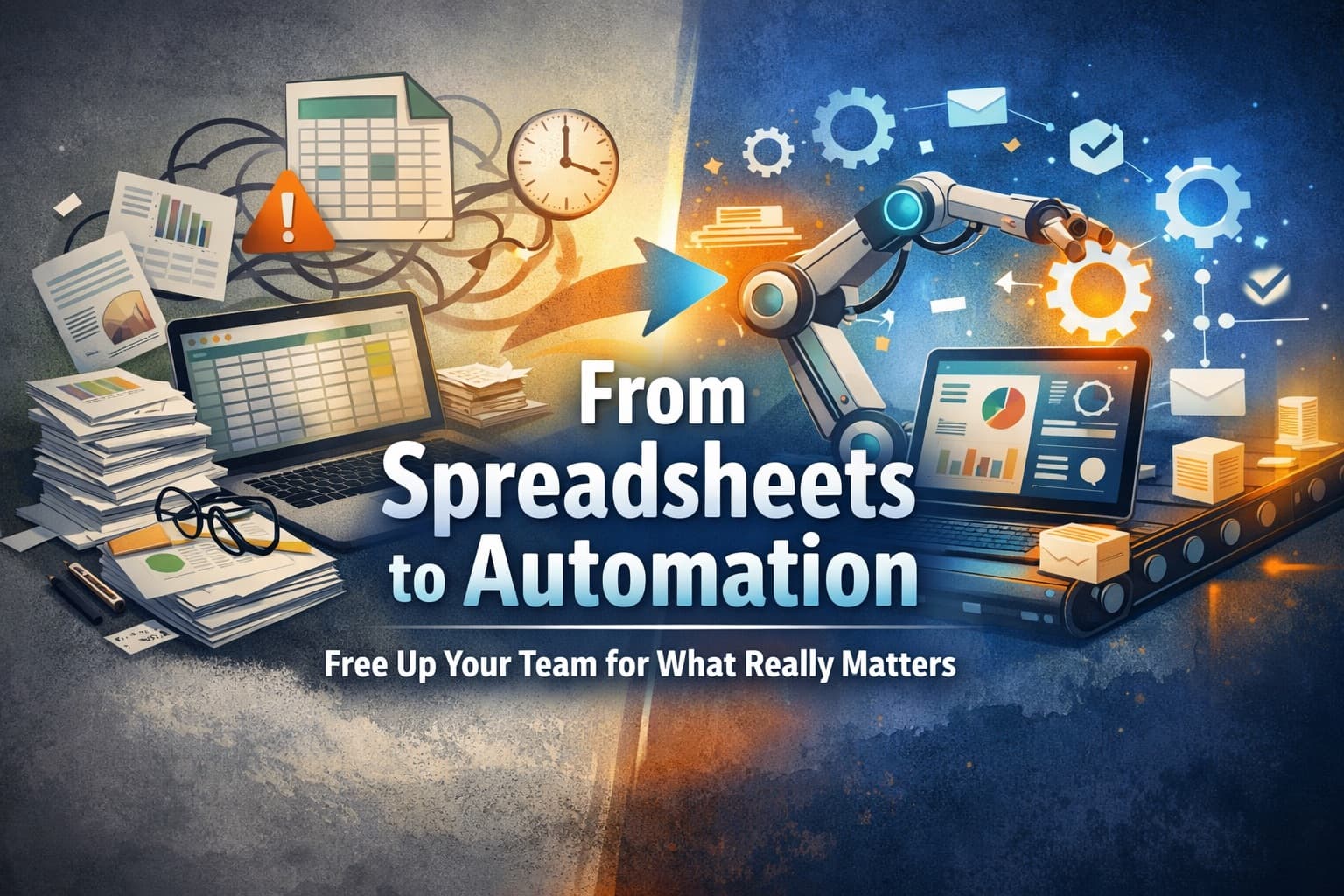
Spreadsheets are everywhere. They start as a quick fix, grow into "the system," and quietly become the backbone of critical business processes.
And that's the problem.
If your organization is using spreadsheets to manage workflows, approvals, inventory, customers, projects, or reporting, you're likely paying a hidden operational tax every single day.
This post explains why spreadsheets break down at scale—and how purpose-built digital systems can free your team to focus on higher-value work.
⸻
Why Spreadsheets Stick Around (Long After They Should)
Spreadsheets survive because they're:
- Easy to create
- Familiar to staff
- Flexible in the moment
But flexibility is not the same as reliability.
What starts as:
"Let's just track this in a spreadsheet for now"
Turns into:
- Multiple versions emailed around
- Conflicting data
- Manual copy-paste between systems
- Tribal knowledge ("Only Susan knows how that formula works")
At that point, the spreadsheet isn't saving time—it's creating friction.
⸻
The Real Cost of Spreadsheet-Driven Processes
Spreadsheets fail in predictable ways:
1. Manual Work Everywhere
People spend hours:
- Entering the same data in multiple places
- Cleaning up formatting issues
- Fixing broken formulas
- Reconciling conflicting versions
That's expensive labor doing low-value work.
2. Errors You Don't See Until It's Too Late
Spreadsheets don't enforce rules well:
- Required fields get skipped
- Invalid data sneaks in
- One bad formula quietly corrupts results
By the time someone notices, decisions have already been made.
3. No Automation, No Flow
Spreadsheets don't:
- Trigger notifications
- Route approvals
- Enforce business rules
- Integrate cleanly with other systems
So humans become the glue—and humans are slow, inconsistent, and busy.
4. Zero Scalability
The moment your volume grows:
- Files get sluggish
- Processes break
- Reporting becomes unreliable
- New hires take forever to onboard
Spreadsheets don't scale. They stall.
⸻
What a Digital System Does Better (By Design)
A properly designed digital system replaces spreadsheet chaos with structure and automation.
Here's what changes:
Centralized, Structured Data
- One source of truth
- Role-based access
- Validation rules that prevent bad data
No more guessing which file is "the latest."
Automated Workflows
Instead of people pushing processes forward:
- Tasks trigger automatically
- Approvals route themselves
- Notifications happen instantly
- Exceptions are flagged, not missed
The system does the boring work. People handle the decisions.
Built-In Business Rules
Rules that live in someone's head (or a fragile formula) become:
- Enforced logic
- Repeatable outcomes
- Auditable decisions
This is where consistency comes from.
Real-Time Reporting
No more manual rollups or last-minute spreadsheet heroics.
- Dashboards update automatically
- Data reflects reality, not yesterday
- Leadership gets answers fast
⸻
This Doesn't Mean "Big, Expensive Software"
A common misconception:
"We need an enterprise platform to fix this."
You don't.
Most organizations need:
- A lightweight custom system
- Built around their process
- Integrated with existing tools
- Designed to evolve as needs change
The goal isn't complexity. The goal is removing unnecessary human effort.
⸻
The Best Candidates for Automation
If you answer "yes" to any of these, you're overdue for a better system:
- Do multiple people update the same spreadsheet?
- Does someone manually move rows from one sheet to another?
- Are emails or Slack messages required to "push" work along?
- Do mistakes get caught after the fact?
- Does onboarding new staff require "shadowing" to learn the spreadsheet?
Those are system problems, not people problems.
⸻
Freeing People to Do More Important Work
When spreadsheets are replaced with purpose-built systems:
- Staff stop acting as data entry clerks
- Errors drop dramatically
- Processes run faster and more predictably
- Leaders regain visibility
- Teams focus on judgment, creativity, and problem-solving
That's where real value lives.
⸻
How We Help
We help organizations:
- Identify where spreadsheets are creating friction
- Design streamlined digital workflows
- Build systems with automation baked in
- Integrate data across tools
- Reduce manual work without disrupting operations
Not with generic software—but with systems designed around how your business actually runs.
⸻
If your spreadsheet feels "mission-critical," that's the warning sign.
It's doing a job it was never meant to do.
If you're ready to replace manual effort with clarity and automation, let's talk.
Written by
Paul Eident